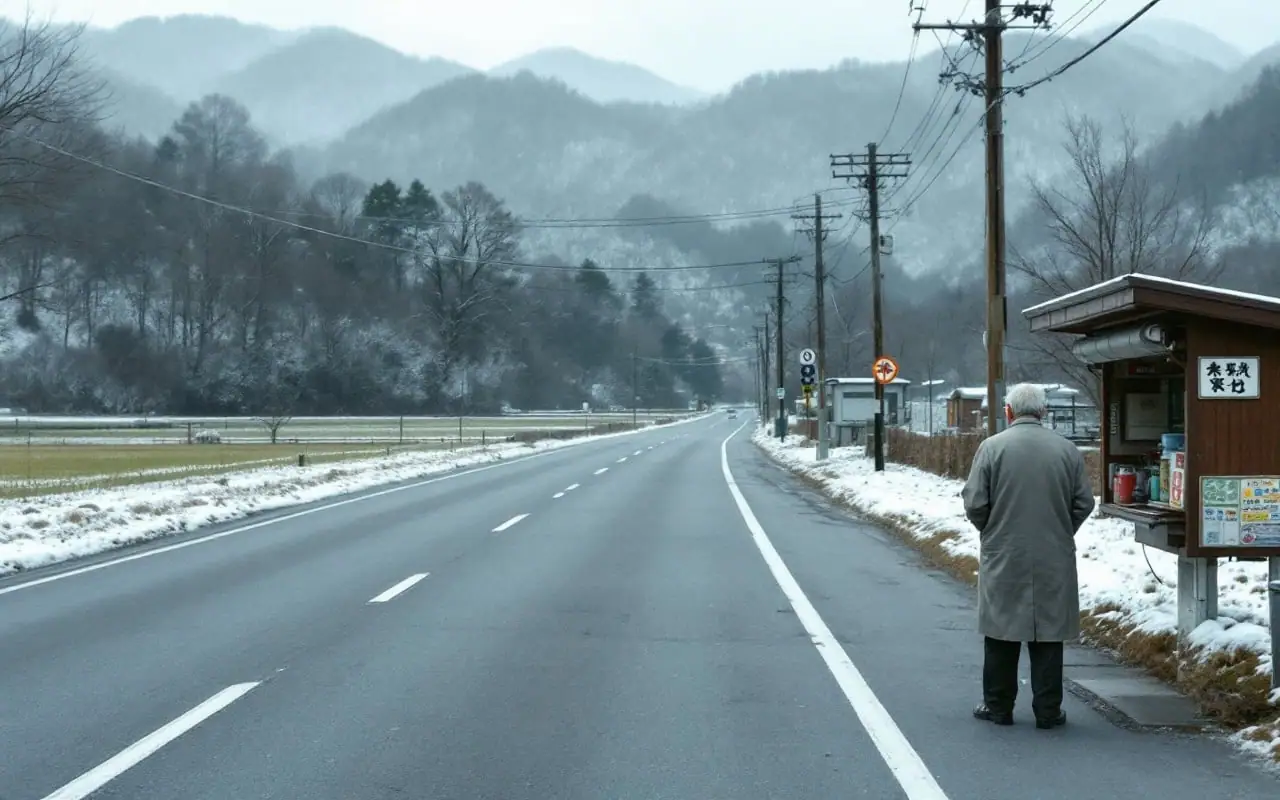
For a lot of people, the nearest eye doctor is nowhere near the corner. It is an hour's drive, or two buses and a train with long gaps between them, or a full day off work. That is ordinary life in the hill villages and coastal towns of northern Kyoto Prefecture, and just as ordinary in farming country, mountain valleys and small islands in many parts of the world.
Distance nudges people toward one rule: only go if something is clearly wrong. The trouble is that several common eye diseases do their damage quietly, with no pain and no obvious change, and checks at the right interval are what protect sight. This page collects practical ways to keep eye care going when every visit is a trip. Treat it as a starting point for a conversation with your own eye doctor, who knows your eyes and what is available locally.
Plan the whole year of visits
The most useful habit is to put eye appointments into the year ahead, the way you would plan around a harvest or a family wedding. Ask your eye doctor when your next check is due and write it down that day. If certain months are bad for you (planting season, a local festival, the weeks of heaviest snow), tell the clinic so the timing can work around them.
Book the next appointment before you leave the building. Calling from home once you are back tends to slide into next month, and then the one after.
Where you can, make one trip do several jobs. Pair an eye appointment with a diabetes checkup, a pharmacy visit or shopping in town, and the long drive feels less like a cost.
Dilation days and getting home
To examine the retina properly, the doctor often uses drops that widen the pupils. For several hours afterward, light is dazzling and focus is poor, and you should not drive, ride a motorcycle or cycle. Where everyone drives everywhere, this is often the hardest part of an eye exam to plan for.
| Way home | What to plan |
|---|---|
| A relative or friend drives | Tests can run long, so agree on a flexible pickup time |
| Bus or train | Check the last return service before you go; the glare does not stop at the station |
| Taxi | There may be few in rural areas, so book ahead |
| Community or volunteer transport | Many areas run schemes for medical trips; ask your town office, local council or health service |
If driving yourself is the only option, say so when you book. The clinic may plan dilation for a different visit, or suggest you wait until your vision is fully back to normal before setting off, which can take several hours. Some checks can be done with photographs instead, but not all of them, and your eye doctor will decide what is needed. What you should never do is drive while your vision is still blurred. Pack sunglasses and a hat for the trip back.
Winter travel
In snowy country, roads can change within a day. In the north of Kyoto Prefecture, as in many northern regions, heavy snow can close routes or turn a one-hour drive into a much longer one. A little planning in autumn helps:
- Ask whether winter appointments can be placed in months or at times of day when travel is usually easier.
- Before winter, make sure your drops would last even if a visit slipped by a few weeks.
- If heavy snow is forecast, call the day before to talk about moving the appointment.
- Sort out winter tires, or a driver used to snow, well in advance.
If you do reschedule, fix the new date during the same call. "When the snow melts" has a way of turning into early summer.
Bright days after snowfall bring their own problem. Snow reflects UV strongly, and long hours outside clearing it or walking on it can leave eyes sore and inflamed. Sunglasses labeled UV400 or 100% UVA/UVB, and a hat with a brim, help.
Keeping long-term follow-up on track
Glaucoma
Glaucoma is a leading cause of irreversible blindness worldwide, and in its early stages it usually has no symptoms. Vision is lost gradually from the edges, and because the other eye fills in the gaps, many people notice only when damage is advanced. Drops that lower eye pressure are a common first treatment, and regular pressure checks and visual field tests show whether treatment is working. Stopping the drops, or stretching the gap between visits because you feel fine, risks loss you will not notice until it cannot be undone. Your eye doctor will decide how often you need to be seen. Glaucoma after 40 explains more, and the Glaucoma Research Foundation has plain-language material.
Diabetic eye disease
People with diabetes are usually advised to have a dilated eye exam at least once a year, or as often as their doctor recommends, because early diabetic retinopathy has no symptoms. It is easy to keep up with diabetes appointments and let eye checks drift for years. Try to book the two close together, and ask that results be shared between your doctors. In some regions, diabetic eye screening uses photographs of the retina taken at a local site or a mobile unit and read by specialists elsewhere; ask whether anything like that runs near you. Diabetic retinopathy checkups has the background.
Counting your medicine
When the clinic is far away, running out of drops is not a quick fix. Pick a fixed day each month to count what is left, and if someone in the family helps, do it together. If you will run short before the next visit, contact the clinic early. Your eye doctor decides how much can be prescribed, so never make a supply last longer by using it less often. Some pharmacies deliver or mail refills; ask what is available locally.
Noticing changes between visits
When visits are far apart, everyday checks count for more. Now and then, cover one eye and look at something with straight lines, such as a door frame, a window or the numbers on a calendar, then switch. With both eyes open, the better eye hides problems in the other. An Amsler grid can help you notice changes from macular disease such as age-related macular degeneration. It is a self-check, not a diagnosis, and AMD and the Amsler grid shows how to use one.
Family members often see change first: more stumbles on steps, sitting closer to the television, giving up the newspaper, new scrapes on the car. If you notice these in someone you live with, contact their eye doctor rather than waiting for the next booked visit.
Referrals to a distant hospital
Detailed tests or surgery may mean a referral to a larger hospital even further away. The trip is a burden, but the referral letter means the specialist starts with your history instead of from scratch.
After an operation or specialist treatment settles down, routine follow-up often moves back to a local clinic, with the two sharing information. Before you leave the hospital, ask who will see you next, where, and how often. There is more on referrals in finding an eye doctor and planning your visit.
What phone and video can and cannot do
Some clinics now offer phone or video appointments. They are useful for talking through results, deciding how urgent a new symptom is, or answering questions between visits. They cannot replace the exam itself. Eye pressure, the retina, the optic nerve and the visual field all need equipment and a person in the room. Use a call to decide what to do next, then follow the eye doctor's advice about coming in.
The same goes for a quick eyesight test at an optical shop. It is designed to set a glasses prescription and cannot rule out eye disease, so if new glasses do not make things clear, the cause may lie elsewhere. Where optometrists practice locally, they can be a nearer first stop for routine checks and can refer you on when something needs an ophthalmologist.
Family support from a distance
Relatives who live far away often time a visit home around an appointment. Driving is only part of the help. A second person can take notes during the explanation, put the next appointment on a shared calendar, and check how the drops are going in. Before you go into the exam room, ask what the patient is worried about, so you can raise it if they forget.
Distance is no reason to wait
Living far away makes "let's see how it is tomorrow" tempting. Do not wait with these:
- New flashes of light, a sudden shower of floaters, or a curtain over part of your vision: a possible retinal tear or detachment, which needs eye care the same day
- Severe eye pain with blurred vision, haloes, headache and nausea: possible acute angle-closure glaucoma, an emergency
- Sudden loss of vision in one eye, even if it comes back within minutes: a possible warning sign of stroke, also an emergency
- A chemical splash (rinse with plenty of clean water for at least 15 minutes first) or an eye injury
For emergencies, call your local emergency number, such as 911, 999, 112, or 119 in Japan. First aid steps are on eye emergencies and first aid.