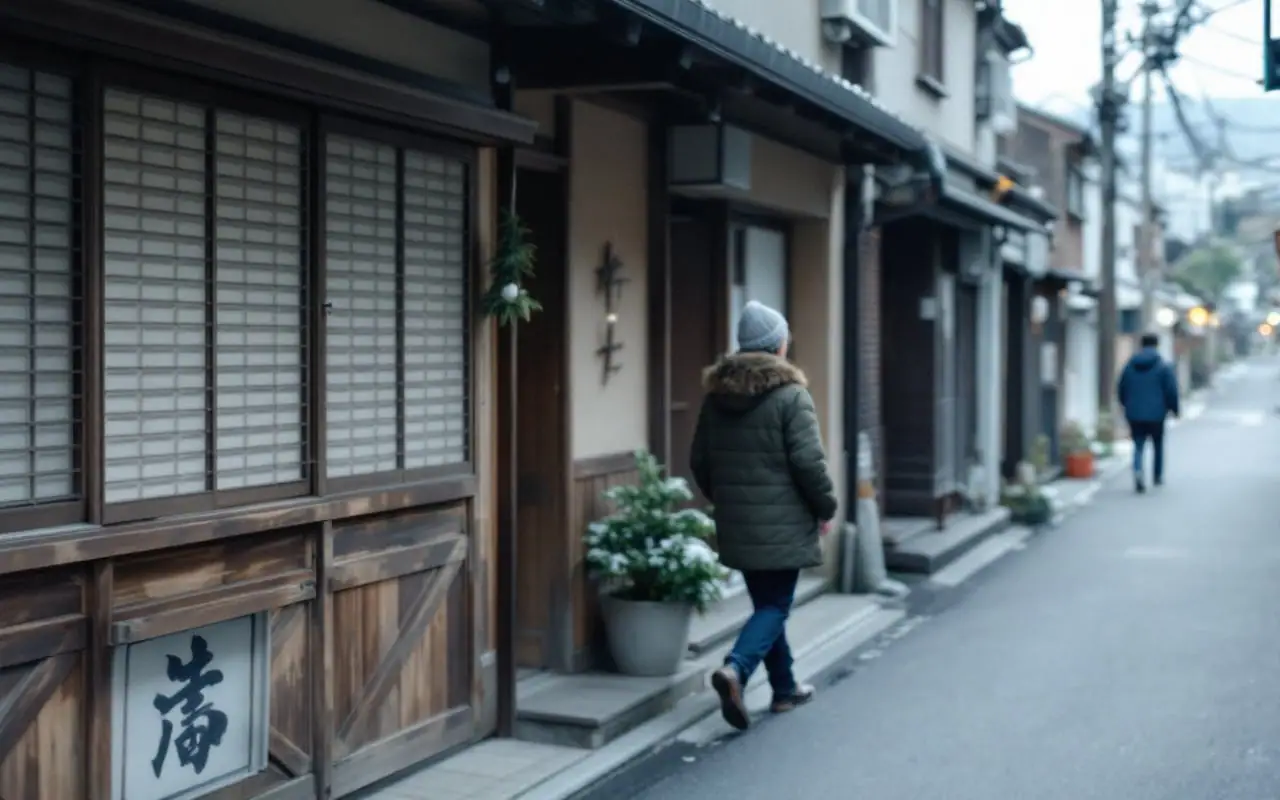
Every country has its long breaks. Christmas and New Year, Easter, Thanksgiving in the United States, Lunar New Year across much of East Asia. In Japan the big ones are the New Year holiday and Golden Week in early May, when Kyoto's temples fill with visitors and many small clinics lock their doors for days at a time.
That is what these breaks have in common: eye clinics close, sometimes for a long weekend, sometimes for a week or more. A small problem that would normally mean a quick appointment tomorrow becomes a long wait. Drops run out. A lens starts to sting on a Saturday night. A child wakes up on a public holiday with one eye red and sticky. This page covers what to sort out before a break, where to turn during it, and which symptoms cannot wait for the clinic to reopen.
Two weeks before: a checklist
| Check | What to do |
|---|---|
| Regular eye drops or other medicine | Count what is left. If it will run short, mention it at your next appointment or call the clinic well before it closes. Your eye doctor decides how much to prescribe; do not stretch a supply by using drops less often |
| Contact lenses | Enough spares for the whole break plus a few extra, with your case and solution |
| Glasses | A pair with your current prescription that you can wear all day if your eyes need a rest from lenses |
| Follow-up appointments | If one falls during the break, rebook now. Clinics fill up fast once they reopen |
| A nagging symptom | Have it checked before the break rather than worrying through it |
| Your clinic's holiday dates | Check the website or the notice on the door and write the dates down |
| Out-of-hours options | Look up your nearest emergency department, urgent care center and medical advice line, and save the numbers |
The glasses line matters more than it looks. When a lens wearer's eye turns red, gritty or sore, the first step is to take the lenses out, and that is only easy with a decent pair of glasses on hand. Pack glasses, a lens case and solution for any trip. Day-to-day lens care is covered in contact lens trouble and everyday care, and holiday changes to opening hours in how to read an eye clinic's hours.
Holiday hazards, season by season
Holidays change routines, and eye trouble tends to follow the season.
Spring breaks bring the first strong sun of the year. Hours by a river or on a hillside add up to a lot of UV for the eyes, so take a hat and sunglasses labeled UV400 or 100% UVA/UVB. Darker lenses are not the same as more protection. Pollen is often still around as well, and rubbing itchy eyes only makes them worse. There is more in hay fever and itchy eyes and summer sun and your eyes.
Summer means pools, beaches and lakes. Do not swim in contact lenses: Acanthamoeba, the cause of a rare but serious eye infection, is linked to water exposure. Fireworks and sparklers belong at arm's length from the face, with an adult beside every child who holds one. Long days in air conditioning can leave eyes dry, too.
Winter brings cleaning. In Japan a big clean before the New Year is a tradition, and plenty of households elsewhere do the same before guests arrive. Oven cleaners and drain cleaners are alkalis, among the most dangerous chemicals for the eye, so wear goggles or at least glasses when spraying or scrubbing above head height. Long drives to see family and dry, heated rooms both tire the eyes. Take breaks.
Where to go when your clinic is closed
| Situation | Where to turn |
|---|---|
| Not sure how urgent it is, or where anything is open | A medical advice line if your country has one, or your doctor's or insurer's after-hours line |
| Mild redness or grittiness, normal vision, no severe pain | An optometrist or urgent care center offering same-day visits, a pharmacist for advice, or your own clinic when it reopens if it settles |
| New flashes and floaters, a shadow over part of your vision, sudden blurring | Same-day eye care: an eye emergency service if your area has one, otherwise the emergency department |
| Severe pain with nausea, a chemical injury, something stuck in the eye | The emergency department |
| Sudden loss of vision, especially with face drooping, arm weakness or slurred speech, or an eye injury alongside other serious injuries | Call your local emergency number |
Many countries run a phone or online service for medical problems that are not emergencies. NHS 111 in England is one example: you describe what is happening, and the service tells you how urgently you need care and where to get it. Some health insurers and doctors' offices run their own after-hours nurse lines. Find out what exists where you live, and where you will be staying if you travel, before the break starts.
Emergency departments see eye problems, but not every hospital has an eye specialist on site around the clock. Staff will assess you and call in or refer to the eye team when needed. Some large cities have a hospital with a dedicated eye emergency department, which is worth knowing about if you live near one.
Urgent care centers handle plenty of minor injuries, but many lack the equipment for a detailed look inside the eye. For a sudden change in vision, go to an emergency department or an eye emergency service instead. In some areas, optometrists offer same-day appointments for minor urgent problems such as a red eye or a speck of grit.
Unless it is a true emergency, phone ahead to check that the place you are heading can see eye problems that day.
If you are traveling, carry a list of your medicines, your usual drops, your glasses and your insurance details. A doctor who has never met you can help far faster when they know what you already use.
Symptoms that cannot wait for the clinic to reopen
- Sudden loss of vision in one eye, even if it returns within minutes. This can be a warning sign of stroke: call your local emergency number (such as 911, 999, 112, or 119 in Japan).
- Severe eye pain with blurred vision, haloes around lights, headache and nausea. This can be acute angle-closure glaucoma, an emergency.
- New flashes of light, a sudden shower of floaters, or a curtain or shadow over part of your vision. These can signal a retinal tear or detachment and need eye care the same day.
- A chemical in the eye. Do not rub. Rinse at once with plenty of clean water for at least 15 minutes, then get urgent care.
- A blow to the eye, something stuck in it, or a speck you cannot rinse out. Do not press on the eye or try to pull out anything embedded.
- Pain, redness, light sensitivity or blurred vision in a contact lens wearer that does not settle once the lenses are out.
In each case, early treatment gives the best chance of protecting sight. The holiday is not a reason to wait. First aid steps are on eye emergencies and first aid.
If it can wait: until the clinic reopens
Mild redness, slight itching or a little discharge, with normal vision and no real pain, can often wait a day or two. In the meantime:
- Do not rub your eyes.
- Wear glasses, not contact lenses.
- Do not use old prescription drops or anyone else's drops. The cause this time may be different.
- Keep your own towel and pillowcase, wash them often, and wash your hands after touching your eyes.
- If things get worse or your vision changes, stop waiting and use the options above.
Even if it settles, mention it to an eye doctor once the clinic is open again.
After the break
The first days after a holiday are among the busiest of the year for clinics, full of people who held on through the closure. If you need an appointment, call early and expect a longer wait than usual. If you do not yet have a regular eye doctor, finding an eye doctor and planning your visit is a good place to start, ideally well before the next long weekend comes around.